Author: Ted Lin

October 5, 2017

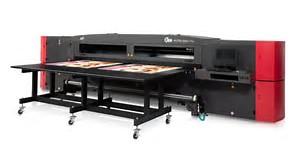
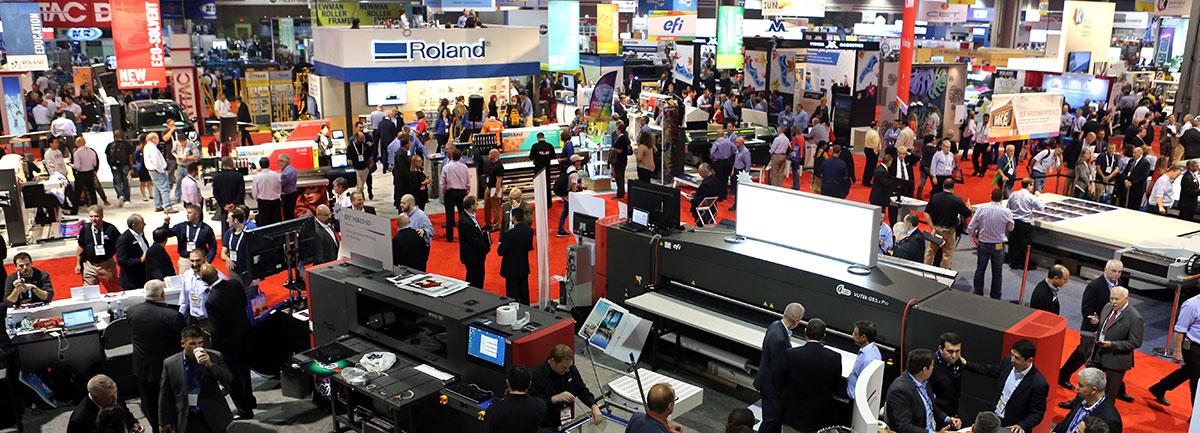
October 5, 2017 — Lyndhurst, NJ — Hop Industries, manufacturer of the durable Hop-Syn synthetic paper, today announces that Electronics For Imaging, Inc. (Nasdaq:EFII) will demonstrate how easy it is to produce high quality, backlit signage using the EFI™ VUTEk® LX3 Pro printer and Hop-Syn BL synthetic paper at its booth #1501 at 2017 SGIA Expo. At the Expo, which takes place in New Orleans, Oct 10-12, attendees are invited to visit the EFI booth to experience live demonstrations of the 3.2-meter LED inkjet printer creating backlit signage using the durable and environmentally friendly Hop-Syn BL 10mil. Free samples of the backlit signage will also be available at Hop’s booth #4017.


“The live demonstrations at SGIA Expo provide a wonderful opportunity to showcase high-value, backlit applications achievable with EFI inkjet technology and Hop-Syn,” comments Ken Hanulc, VP of marketing, EFI inkjet. “Attendees can take the samples and show their customers the new and innovate ways to use backlit signage in their advertising strategies.”

“We are delighted to collaborate with EFI again”

“We are delighted to collaborate with EFI again,” comments Jack Smith, Senior Vice President, Hop Industries. “SGIA Expo attendees can see the print quality of the VUTEk and Hop-Syn backlit signage first hand.”


Hop-Syn BL is an environmentally friendly synthetic paper that is used for back lit P-O-P signs, transit and airport displays, bus shelters, fine art, and more. It can be printed by flexography, offset, screen, thermal transfer and inkjet. The VUTEk LX3 Pro is designed for high production throughput. It helps customers print high volumes with shorter lead times, while maintaining image quality.


Free passes to SGIA Expo are available upon request from Hop Industries. For more information, contact Hop Industries at 1-800-524-0757 or visit www.hopsyn.com.


About Hop-Syn

Hop-Syn® is a division of Hop Industries Corp. based in Lyndhurst, NJ. Hop-Syn is a synthetic paper constructed from polypropylene (PP) resins and calcium carbonate (CaCO3), which provide extra durability and weather resistance over traditional pulp-based papers. Customers use Hop-Syn to print high quality graphics via offset litho, uv offset, flexo, screen, uv ink jet or thermal transfer equipment. Each Hop-Syn grade has unique characteristics to match the application, hence the phrase, “The Application Specific Synthetic Papers.” If customers need foldability for a map, there’s a grade for that. If customers need thickness for a P-O-P sign, there’s a grade for that. If customers need translucency for a light box, there’s a grade for that. If customers need extra opacity for a block out window sign, there’s a grade for that. For more information, visit www.hopsyn.com or call 800-524-0757.

 

October 2, 2017

Substrates have certainly come a long way. Read the article, “Going Beyond Paper,” which features Jack Smith of Hop Industries, and find out how far it’s come!

September 28, 2017

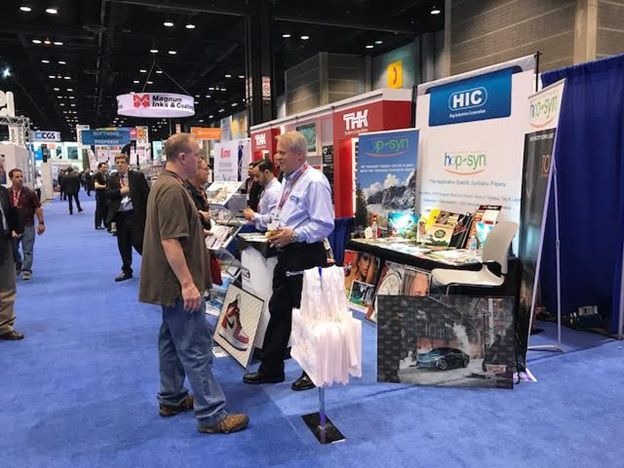
September 28, 2017 — Lyndhurst, NJ — Hop Industries, manufacturer of the durable Hop-Syn synthetic paper, today announces that PRINT 17 was a resounding success for the company. Printers and big brands visited Hop’s booth during the show, which took place September 10-14 in Chicago, to learn new and innovative ways to use the durable and environmentally-friendly synthetic paper. Hop handed out free samples of Hop-Syn and shared expert advice about printing on the durable substrate.

“PRINT 17 was an excellent event for Hop Industries”

“PRINT 17 was an excellent event for Hop Industries,” comments Jack Smith, Senior Vice President, Hop Industries. “We had a large number of attendees tell us that Hop-Syn is their #1 choice for a durable substrate. They value quality output and appreciate that the environmentally-friendly synthetic paper is in line with their sustainability criteria.”


At PRINT 17, Hop Industries demonstrated its full line of synthetic paper, which includes Hop-Syn XT, BL, TO, G1, G2, and DL grades. Hop-Syn synthetic paper is a single-layered mineral filled polypropylene that is waterproof, tear resistant and 100% recyclable. Each Hop-Syn paper grade is developed for specific applications such as P-O-P displays, banners, blockout and backlit signs. It’s also used for packaging, hang tags, book covers, manuals, maps and more. Hop-Syn is easily printable by offset, screen, flexo, and UV inkjet processes. The substrate comes in a wide variety of thickness, from .0025 up to .035 gauge, and is easy to fold, diecut, and score.


For more information, contact Hop Industries at 1-800-524-0757 or visit www.hopsyn.com.


About Hop-Syn
Hop-Syn® is a division of Hop Industries Corp. based in Lyndhurst, NJ. Hop-Syn is a synthetic paper constructed from polypropylene (PP) resins and calcium carbonate (CaCO3), which provide extra durability and weather resistance over traditional pulp-based papers. Customers use Hop-Syn to print high quality graphics via offset litho, uv offset, flexo, screen, uv ink jet or thermal transfer equipment. Each Hop-Syn grade has unique characteristics to match the application, hence the phrase, “The Application Specific Synthetic Papers.” If customers need foldability for a map, there’s a grade for that. If customers need thickness for a P-O-P sign, there’s a grade for that. If customers need translucency for a light box, there’s a grade for that. If customers need extra opacity for a block out window sign, there’s a grade for that. For more information, visit www.hopsyn.com or call 800-524-0757.
 

September 12, 2017


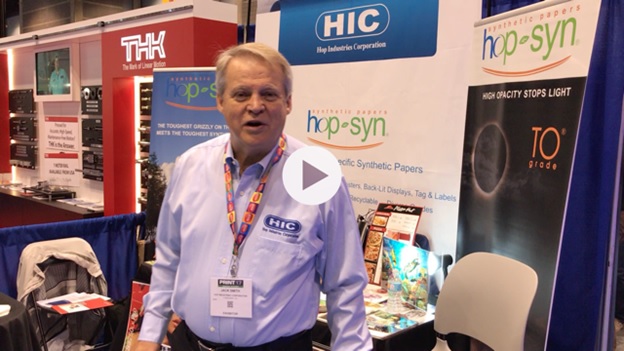
PRINT 17 in Chicago, IL is in full swing and Hop Industries invites you to visit their Booth #558 at the Expo. Learn about all the ways to use the durable Hop-Syn Synthetic Paper. Receive free samples of Hop-Syn printed by SwissQPrint and EFI inkjet printers. For more information, visit www.hopsyn.com or call 800-524-0757.


September 10, 2017

September 10, 2017 — Lyndhurst, NJ — Hop Industries, manufacturer of the durable Hop-Syn synthetic paper, today announces that its line of synthetic papers are in compliance with, and exceed, three environmental standards, CONEG, RoHS, and REACH. Compliance with these standards validates that Hop-Syn synthetic papers can be safely used in a variety of packaging, labeling, and printing applications. It also demonstrates Hop Industries’ ongoing commitment to sustainability in its manufacturing process and product offerings.


“Compliance with environmental standards, including CONEG, RoHS, and REACH, assures brands and their print partners that their Hop-Syn print projects can meet sustainability requirements at all levels,” comments Jack Smith, Senior Vice President, Hop Industries. “Supporting these environmental standards is as important to our customers as it is to us.”


Compliance with Environmental Standards

Unlike other durable substrates, Hop-Syn synthetic papers are free of toxins, heavy metals, and stearates, which are detrimental to the environment. Hop-Syn synthetic paper is a single layered sheet made from a mixture of polypropylene and calcium carbonate, and is 100% recyclable. The Hop-Syn substrate exceeds compliance requirements with the Restriction of Hazardous Substances (RoHS) directive. RoHS restricts the use of heavy metals and hazardous chemicals used in the labeling and packaging of consumer products.


Hop-Syn synthetic papers also exceed compliance with legislation introduced by the Coalition of Northeastern Governors (CONEG), which requires reductions in the amount of four heavy metals (mercury, lead, cadmium, and hexavalent chromium) in packaging and packaging components sold or distributed in the participating states.


Hop-Syn synthetic papers also exceed compliance with Registration, Evaluation, Authorization and Restriction of Chemicals (REACH), a European Union regulation that addresses the production and use of chemical substances, and their potential impact on both human health and the environment.


Promoting Compliance

Hop Industries encourages its customers to use CONEG, RoHS and REACH logos to demonstrate that their Hop-Syn synthetic paper projects are compliant with these standards.


For more information, contact Hop Industries at 1-800-524-0757 or visit www.hopsyn.com.


About Hop-Syn

Hop-Syn® is a division of Hop Industries Corp. based in Lyndhurst, NJ. Hop-Syn is a synthetic paper constructed from polypropylene (PP) resins and calcium carbonate (CaCO3), which provide extra durability and weather resistance over traditional pulp-based papers. Customers use Hop-Syn to print high quality graphics via offset litho, uv offset, flexo, screen, uv ink jet or thermal transfer equipment. Each Hop-Syn grade has unique characteristics to match the application, hence the phrase, “The Application Specific Synthetic Papers.” If customers need foldability for a map, there’s a grade for that. If customers need thickness for a P-O-P sign, there’s a grade for that. If customers need translucency for a light box, there’s a grade for that. If customers need extra opacity for a block out window sign, there’s a grade for that. For more information, visit www.hopsyn.com or call 800-524-0757.
 

Media contacts

Jack Smith, Senior Vice President
Hop-Syn, a division of Hop Industries
201.777.6212


September 1, 2017

The demand for durable substrates is growing. Today, print partners are choosing synthetic paper over corona-treated, die-extruded plastic such as PVC vinyl or polystyrene. The advantages are great, and the applications are numerous. In this article, we highlight why.


Printing on Corona-Treated Plastic
For decades, corona-treated, die-extruded plastic was one of the few durable substrate options, yet its non-porous surface and low dyne level creates multiple challenges. The plastic requires specialized equipment and inks that dry by oxidation or UV lamps. It also requires various press adjustments and ink changes. Printing on corona-treated plastic can burden printing companies with a high volume of waste and slowed production processes due to drying problems, offsetting, static issues, and overall product defects.


Today, printers are opting for tear-resistant polypropylene synthetic paper that offers multiple advantages over printing on corona-treated plastic.


Durability of Calendered and Clay-Coated Synthetic Paper
The key advantage of printing on either clay-filled or clay-coated polypropylene is its high dyne level combined with its microporous surface that allows ink to bond to the surface. This helps to speed up the drying process as well as protects the printed image from scratching and scuffing when exposed to harsh conditions or extreme environments. In comparison, printing on corona-treated plastics takes longer to dry and is more susceptible to ink scratches or scuffing when exposed to rough handling or sunlight discoloration.


A Wide Range of Grades, Thickness and Finishes for Multiple Applications
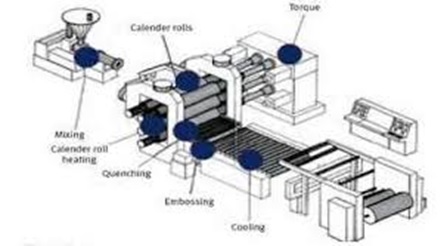
Synthetic paper has two distinct manufacturing processes that differentiate it from corona-treated plastics. The first is a calender manufacturing process that delivers a single layer, clay-filled construction. The calendered synthetic paper comes in multiple grades, finishes and gauge thickness, from .003 mil to .035 mil. It produces a more uniform gauge tolerance (+ or – 5%) over corona-treated, die-extruded plastic. Its clay-filled construction can be made with added elements to enhance its opacity, brightness, foldability, tear- and UV-resistance when exposed to harsh, outdoor environments.


The second manufacturing method produces a biaxially-oriented polypropylene film via a tri-laminated extrusion with a clay-coated emulsion. This method produces a smooth matte finish on both sides. The bright white clay coating produces a high dyne level that allows inks to easily bond to its surface for easy printing by offset, flexo and digital — UV inkjet and latex inkjet — without any pretreatment.


Multiple Grades with Better UV-, Tear- and Temperature-Resistance Over Corona-Treated Die-Extruded Plastics
Because calendered synthetic paper is made from a mixture of polypropylene and calcium carbonate, it can be made with different additives for a wide range of applications. These include high opacity for block-out window signs, low opacity for back-lit transit signs, high propagated tear and UV resistance that allow it to be used outdoors up to one year under direct sunlight without turning brittle or changing color. High temperature resistance from -50F° up to 220F° allows it to withstand extreme temperature changes without cracking or distorting.


With the ability to produce different grades with better physical properties, calendered  synthetic paper offers a wide variety of printing advantages over corona-treated die-extruded plastics. For example, clay-filled calendered synthetic paper has less static and a higher dyne level (44-46 dyne) over corona-treated polystyrene and rigid PVC vinyl. This advantage allows calendered synthetic paper to print and register at a faster speed allowing more efficient printing through both high speed offset and flexographic printing processes.


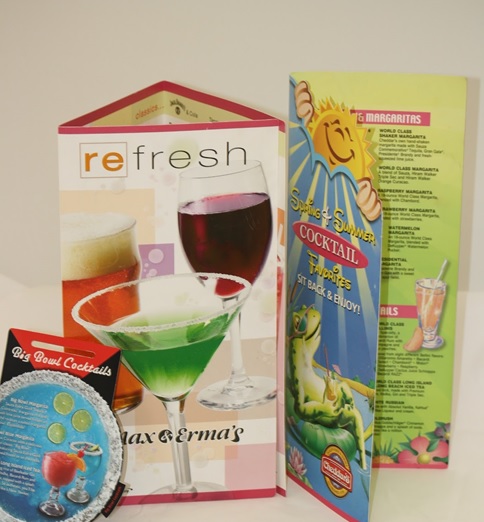
Based on its construction, calendered synthetic paper is popular for printing maps, manuals, menus, book covers, horticultural tags, lumber tags, outdoor posters, sewn banners, back-lit signs and block out window posters that need to hold up under harsh conditions.


Environmentally-Friendly and 100% Recyclable
Synthetic paper made from a combination of polypropylene and calcium carbonate is 100% recyclable under the polypropylene recycling code #5. As a recyclable material, it also stays out of the waste stream longer, saving valuable space in our landfills.


Unlike corona-treated plastic, synthetic paper is free of toxins, heavy metals and stearates that are detrimental to the environment. It uses very little water in the manufacturing process, which preserves Earth’s natural resources. When incinerated, it also generates no sulfur, nitrogen or dioxin gases.


In both the calendering and clay-coating manufacturing processes, trim waste is recycled back into the manufacturing process to produce 100% of the finished product without waste.


Alternatives Banned in Europe
Choosing the right substrate depends on the type of print quality, durability and environmental image that customers require. Corona-treated polystyrene will generally be the lowest cost option, however, it is very brittle and easy to tear. It is also highly flammable and has very limited temperature- and UV-resistance. The substrate usually has either a very rough matte surface or a smooth glossy surface that is not uniform from side to side. Therefore, polystyrene is not the best choice for printing a durable image.


Another option is PVC vinyl, which may have better tear-resistance and print characteristics over polystyrene, but it normally requires a topcoat or corona treatment to anchor special inks to its surface. PVC vinyl will breakdown and become brittle over time. It also has a tendency to turn yellow when exposed to sunlight or even fluorescent light when used indoors.


Also, when PVC breaks down, it turns into hydrochloric acid if exposed to moisture. PVC vinyl is not a popular plastic for recycling due to its environmental implications and is therefore banned from retail packaging applications in Europe.


Print Shops Can Differentiate with the Right Substrate. Ask for expert advice.
Not all plastics are created equal. Being able to print on a wide range of synthetic paper substrates in a variety of grades is a huge differentiating factor for today’s print shop. When considering printing on corona-treated plastics, it’s important to know the substrates printing and physical properties, and if it will be suitable for high tear-, temperature- or UV-resistance, especially for an application where the image needs to hold up and be durable over a long period of time.


Technical support and expert printing advice are provided by the team at Hop Industries. Advice can also be provided by a wide variety of ink manufacturers, coating companies, and fountain solution manufacturers that are related to the offset industry.


To help select the right substrate, Hop Industries offers free test samples and expert advice on the various synthetic paper grade options for printing, folding, gluing, die-cutting and sewing, as compared to corona-treated die-extruded plastic. For example, ask a Hop synthetic paper expert about the right substrate for backlighting that will withstand high temperature and UV resistance when exposed to direct sunlight for more than six months. Printers can also ask Hop for expert advice about the best type of synthetic paper for digitally printing by UV inkjet, latex inkjet or other types of digital printing processes. For more information, visit www.hopsyn.com or call 800-524-0757.
 

Written by Jack Smith, Sr. Vice President, Hop Industries Corporation


Jack Smith is the Sr. Vice President of Hop Industries Corporation. In 1993, he launched the Hop-Syn synthetic paper division of Hop Industries. Smith was instrumental in developing seven grades of Hop-Syn, from back-lit and blockout, to foldable and heavy gauge tear-resistant stock for the P-O-P and packaging markets. He has extensive knowledge in printing processes including, offset, flexo, screen, laser, UV and latex inkjet, as well as fabricating processes including, cold and hot melt glue, film lamination, injection molding, top coating and pressure sensitive coating. Smith’s technical knowledge and experience were fundamental in helping to tailor the Hop-Syn synthetic paper for niche markets.


August 21, 2017

Unequivocally, the biggest trend in wide-format printing is the growth of the UV inkjet and latex printing. Hop Industries, manufacturer of Hop-Syn synthetic paper, is also experiencing continued growth in this segment as brand manufacturers and large retail stores use the durable substrate for UV-printed P-O-P displays and outdoor signage. As this market segment continues to flourish, print partners can use Hop-Syn to take the lead. Here’s how:


Opportunities for Wide-Format Printers
Print partners can take advantage of the growing UV inkjet trend by engaging with their customers and sharing the benefits of using Hop-Syn synthetic paper for retail signs, in-store posters, banners, blockout window posters and back-lit displays. More environmentally-friendly than banner vinyl and polystyrene, Hop-Syn synthetic paper does not contain chlorine, stearates, heavy metals, or other harsh chemicals that are cancer causing or detrimental to the environment. The synthetic paper is 100% recyclable and produced under ISO 9000 standards.


Durable, Sustainable, and Made for UV Inkjet
Designed for UV inkjet specifically, Hop-Syn is a durable substrate that makes brands stand out, in terms of print quality and durability, as compared to pulp-based substrates and less environmentally friendly plastics such as vinyl and polystyrene. Its high dyne level and bright white finish prints sharp definition graphics with high-color density. Suitable indoor or outdoor displays, Hop-Syn also offers high temperature resistance (-60F up to 220F) and one year UV resistance against direct sunlight.


Keep Hop-Syn on Hand

Print partners can order any size quantity of Hop-Syn synthetic paper to keep in house or to store at Hop Industries NJ-based warehouse. Custom sizes are also easily facilitated with Hop Industries in-house converting services. Orders of stock inventory are shipped within 24 hours of being placed. Custom-sheets and roll sizes can take between 2-3 days.


Learn More at PRINT 17 and SGIA Expo

There will be a variety of inkjet equipment manufacturers exhibiting at PRINT 2017 and SGIA Expo, and Hop will be at both events. The company is giving attendees free samples of the Hop-Syn synthetic paper printed by SwissQPrint and EFI inkjet printers. Visit Hop at booth #558 at PRINT 17 and booth #4017 at SGIA Expo.


For more information, visit www.hopsyn.com or call 800-524-0757.
 

August 8, 2017


Big brands turn to their print partners for more than just a printed piece. They seek solutions to help grow their business and increase revenue, while satisfying sustainability mandates. That’s why recommending the right substrate is so important. For projects that require durability, such as banners, in-store signage, anti-theft packaging, blockout and backlit signs, Hop-Syn synthetic paper is the way to go. Here are some ways to let your customers know more about the attributes of this 100% recyclable synthetic paper.


Talk with Customers

Printers should talk with their consumer-brand customers about durable substrate options like synthetic paper that are environmentally friendly for retail store advertising, comments Jack Smith, Senior Vice President, Hop Industries. Using synthetic paper for P-O-P displays, banners, tag and labels, the life of the printed piece is extended over a longer period of time compared to pulp-based paper, and is less damaging to the environment than PVC-based vinyl.


With a wide range of thickness and diverse grades of synthetic paper, the applications of Hop-Syn synthetic paper are just a varied. Brand owners and their print partners use the synthetic paper for book covers, folded maps, large format banners, and much more.


Discuss the Environmental Advantages

When given the option, customers choose environmentally-friendly durable substrates like synthetic paper, especially when the price point is comparable to other plastics. Hop-Syn synthetic paper is polypropylene-based and code 5 recyclable, unlike alternatives such as laminated paper, banner vinyl, rigid PVC products that are not 100% recyclable.


Add it to Your Website

Let customers know that your print facility offers Hop-Syn synthetic paper for their durable print projects. In addition to meeting their high standards for durable substrates, Hop-Syn also satisfies their sustainability requirements. Hop-Syn can withstand harsh weather conditions such as rain and extreme temperatures ranging from -60 to 220F. It also doesn’t discolor from direct sunlight.


The Printer-Friendly Substrate

Printers like using Hop-Syn because it’s easily printable by offset, screen, flexo, and UV inkjet processes due to its smooth white matte finish. The substrate prints like fine offset paper but has the durability of plastic. Made in a wide variety of thickness, from .0025 up to .035 gauge, Hop-Syn synthetic paper comes in six grades, including XT, BL, TO, G1, G2, and DL.


Printers also like the easily availability of Hop-Syn, and the custom sizes made possible by the Hop Industries in-house converting services. Hop’s Lyndhurst, NJ warehouse stocks more than 1 million pounds of inventory, in both sheets and rolls, which can be shipped within 24 hours. Its in-house converting services produces custom sizes from 1″X1″ up to 60″X80″ of any grade of Hop-Syn.


Free samples of Hop-Syn are available upon request. To learn more ways to promote and sell Hop-Syn, visit www.hopsyn.com or call 800-524-0757.
 

July 27, 2017


Easy to fold, diecut, score, and recycle, Hop-Syn G2 is a heavy hitting substrate for P-O-P signage, menus and packaging. Used everywhere by creative print and packaging firms, this heavy gauge synthetic paper knocks it out of the park. Here’s why.


Diverse Printing Properties and Applications
Few substrates have the diverse physical and printing properties of Hop-Syn G2, and customers are always finding news ways of using it. From book covers to retail packaging, Hop-Syn G2 is easier to recycle than paper and contains no cancer-causing chemicals or stearates found in other commodity plastics. Its unique calender manufacturing process uses a mixture of calcium carbonate and polypropylene resin, resulting in a single layered substrate. This process produces a bright white, high opaque, smooth matte finish that is easily printable by offset, flexo, screen, and UV inkjet printing, without requiring any pre-treatment.


Because of its wide range of gauge thickness, Hop-Syn G2 is ideal for finishing and fabricating processes such as folding, diecutting, and scoring, especially if printing quality and durability are considerations. With a high dyne level (44 dyne), anti-static finish, and a +/- 5% gauge tolerance, Hop-Syn G2 delivers the print performance of paper combined with the weather resistance and durability of plastic.


Hop-Syn G2 for Quality Print Jobs
Hop-Syn G2 offers better durability and UV resistance in comparison to conventional plastics, and prints more like fine offset paper than plastic. G2 has an ultra smooth matte finish, excellent dimensional stability and superior ink receptivity for producing higher quality graphics. With 93% opacity for two-sided printing, G2 is temperature resistant from – 60 F up to 220 F, without distortion. This environmentally friendly alternative substrate to PVC is recycled under code # 5. Hop-Syn G2 comes in a variety of roll widths up to 63-inches, and sheet sizes up to 26×40-inches. Its thickness gauge ranges from 12 to 35 mil.


For test samples, technical information, or a price quote, please contact our sales department at 1-800-524-0757 or fill out the online form.


July 21, 2017

Two of the industry’s biggest events are coming soon, and the team at Hop Industries is looking forward to seeing customers at both! Hop will be exhibiting at PRINT 17, booth #558 at McCormick Place South Hall, in Chicago, September 10-14. Hop will also exhibit at SGIA Expo, booth #4017 at the Ernest N. Morial Convention Center in New Orleans, October 10-12. Hop has free passes for both Expos. Contact Hop online or call 800.524.0757.


Celebrate PRINT!
Held every 4 years, this years PRINT Expo theme is “Grow Your Business,” and Hop Industries is helping customers do just that with Hop-Syn, the market’s best synthetic paper. At the Expo, Hop Industries will be demonstrating all its paper grades, which include Hop-Syn XT, BL, TO, G1, G2, and DL. Each synthetic paper grade is developed for specific applications such as P-O-P displays, banners, blockout and backlit signs, as well as hang tags, book covers, maps and more. The durable Hop-Syn substrate is a single-layered mineral filled polypropylene that is waterproof, tear resistant and 100% recyclable.


While at PRINT 17, be sure to join the fun at the first annual Celebrate PRINT! Located at the House of Blues Chicago, the free event will benefit Family Rescue, one of the largest domestic violence agencies in Illinois. Free shuttle buses will be available to this event, which will feature a notable Chicago eighties band Sixteen Candles.


Next Stop, New Orleans!
At SGIA Expo, Hop Industries will also demonstrate it’s full line of its Hop-Syn synthetic paper grades. Free Hop-Syn print samples will also be available at the Hop booth #4017. After visiting the Hop team, stop by the SwissQPrint and EFI booths to speak with the print experts about the print equipment used to produce the Hop-Syn print samples.

At both events, attendees are encouraged to pick up free Hop-Syn samples and speak with the team at Hop about their next print project. For more information, visit www.hopsyn.com or call Hop Industries at 800-524-0757.